Survivor Spotlight: Nicole Naditz
June is National Cancer Survivors Month, and we’re sharing stories and insights from survivors in our CARES community. Nicole Naditz was diagnosed with breast cancer in 2023. An adult skater, she had competed at Snoopy’s Home Ice the week of her biopsy and skated throughout treatment. Nicole returned to Snoopy’s Home Ice in 2024 for Sk8 to Elimin8 Cancer® and raised $4,450 for cancer research to make the journey easier for the next person diagnosed.
Thank you, Nicole, for sharing your story to inspire hope and raise awareness about the importance of continued investment in cancer research.
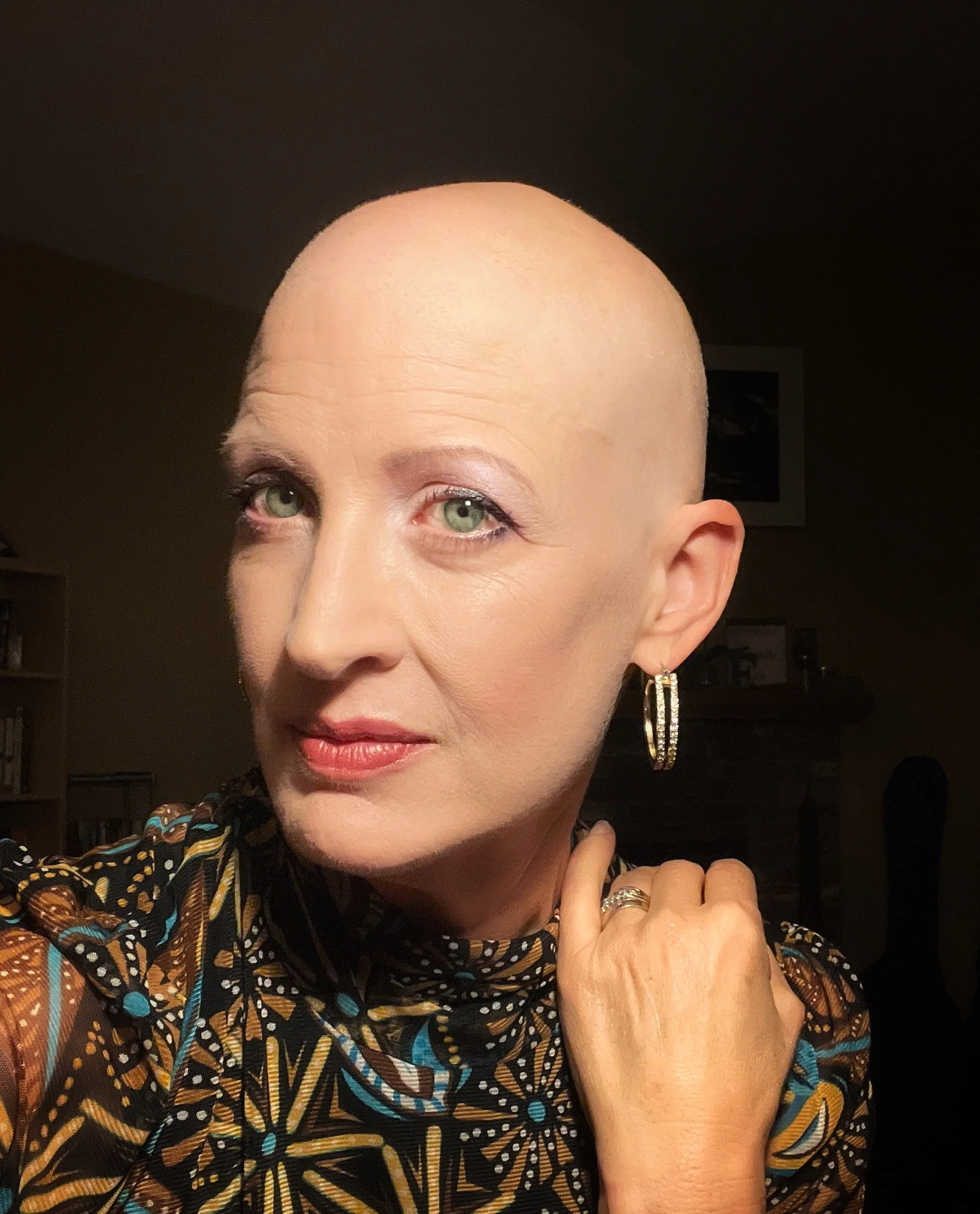
Nicole Naditz
What were your biggest challenges during your treatment?
I was really pretty lucky. Yes, I had aggressive neoadjuvant (pre-surgery) chemotherapy, a double mastectomy (DMX) to flat after the chemo infusions, and then 15 rounds of radiation after the DMX, but I felt like it all went better for me than for some others.
Chemo was hard - sometimes I didn't feel like eating because nothing sounded good. So I started keeping a list: the first time I didn't feel like eating, I went through options in my head and wrote down the one that sounded good that day. That list would build as different things would sound palatable on different days. So, the next time I didn't feel like eating, I reviewed whatever was on the list to see if any of those items sounded good today.
The DMX was not hard technically - it went very well, and because I chose to go flat, my recovery was faster, although one of the holes for the drainage tube did get infected. I also think recovery was faster because I was active before diagnosis, and remained active during chemo infusions, including figure skating. I also had 25 lymph nodes removed, and that has had lasting impacts on my left arm. But there, too, I have been lucky and have not yet developed full lymphedema.
Radiation wasn't hard in and of itself, but the result can be painful. Plus, the surgery and radiation have left behind scarred tissue and muscle that are now tighter, so the range of motion in my left chest wall and arm is a bit limited.
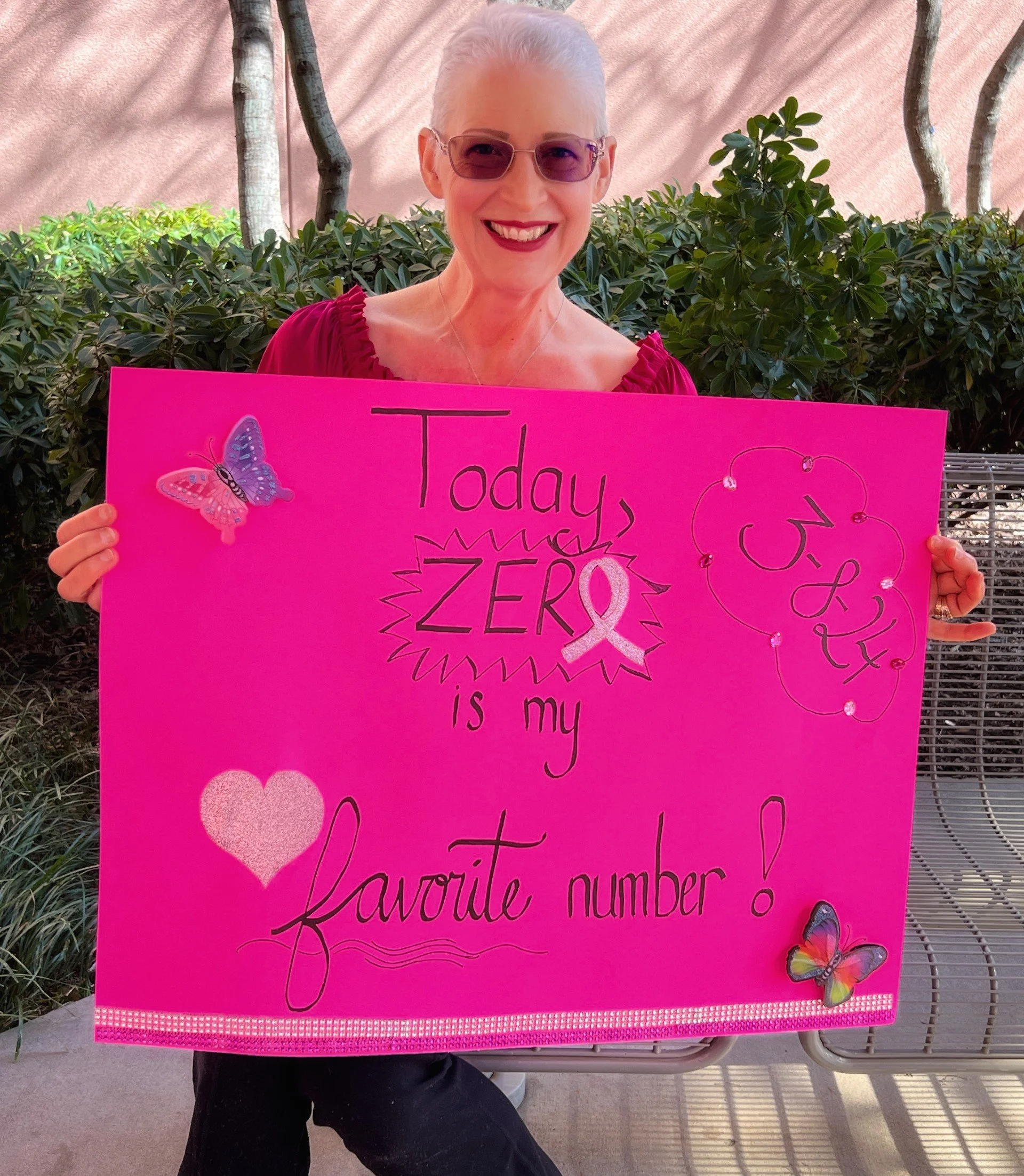
Nicole celebrating her last day of neoadjuvant chemo
In a way, I would say the next stage after all of that has been harder. Because the cancer I had was so aggressively responsive to hormones, I have been taking a chemo-type pill daily and also an aromatase inhibitor. I need to take the chemo pill for two years (which are almost up). But the aromatase inhibitor, which has the worst side effects, I need to take for ten years. Fatigue, joint pain, lightheadedness (including presyncope episodes), shortness of breath, and heart palpitations are part of my world. I have already switched aromatase inhibitors once due to symptoms. Now, I am on a break from the second one (which was worse for me in terms of side effects) to see if my symptoms improve. Part of the issue is that these pills are daily, whereas my chemo infusions were two weeks apart - I could predict when I would have two "bad days" following the infusions. With these longer-term treatments, there is no break. They go into your system every single day.
Did any treatments or trials in your care come from cancer research?
I was not offered any trials, but I know the medications I am on now came from cancer research for sure (verzenio, anastrozole (the first aromatase inhibitor) and letrozole (the second one that I am now on a break from).
Has surviving cancer changed your outlook on life?
That's an interesting question. I wouldn't say my whole outlook changed. In fact, I think my outlook also supported my journey. But I am more attuned to my body, and I am much better at respecting its need for rest, for example. I am also more of a fierce advocate for my medical care. This is especially true because with my healthcare provider, there is no plan for routine follow-up testing of any kind for recurrence. Instead, I have to report any symptoms I notice. Then, fortunately, the medical team is very responsive about following up to ensure that what I am experiencing is not a cancer recurrence or metastasis.
What message would you share with someone diagnosed with cancer?
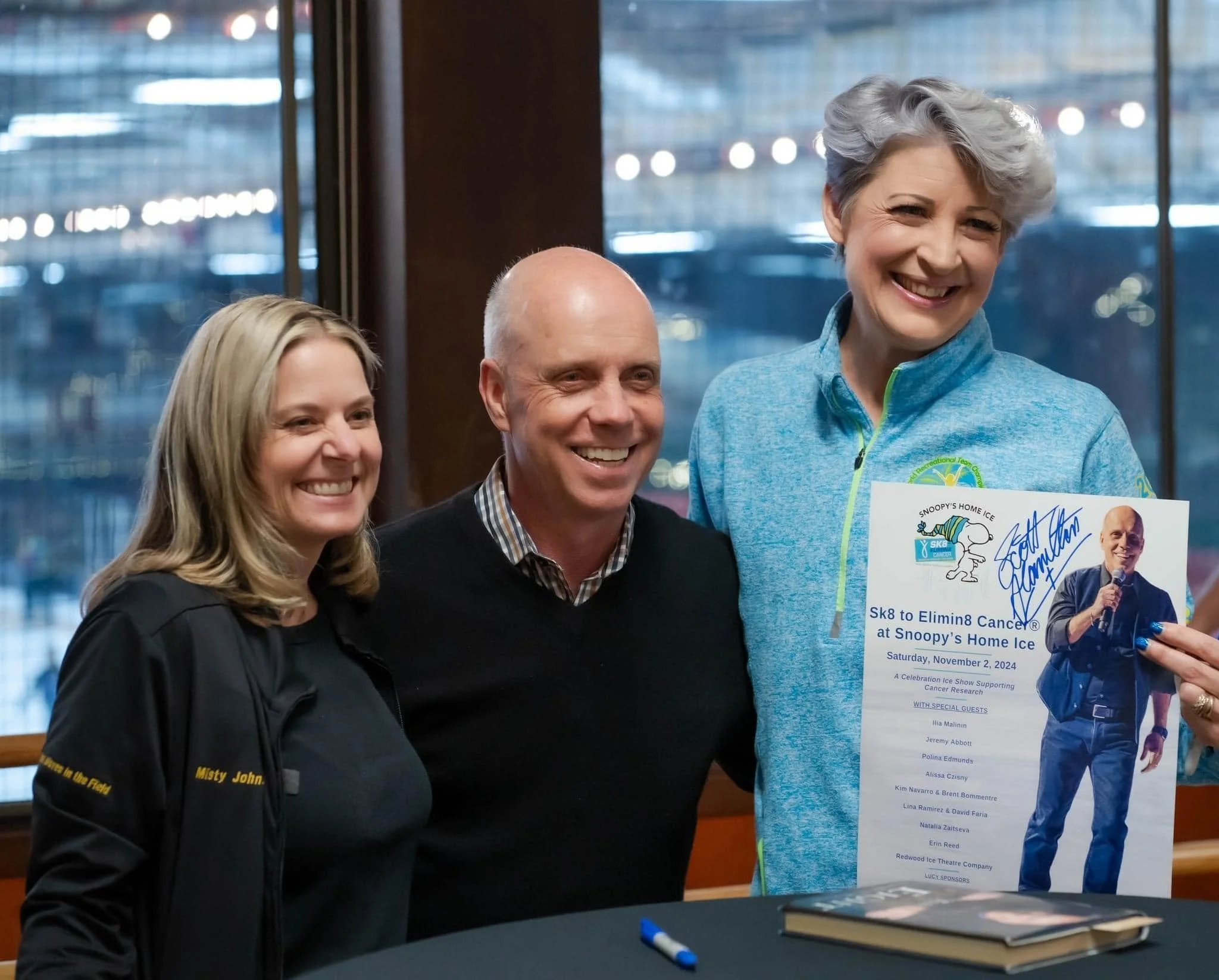
Nicole (right) with Scott Hamilton and her friend Misty Johnson
I have a lot of advice, maybe not a coherent message, though.
Find your circle, or even just one person to whom you can share anything and everything, if doing so helps you process what you are going through. Some are more introverted, but I am lucky to have amazing support from my family, my friends at work, and also my skating team and other personal friends. If someone isn't able to provide the listening and support you need, even if they are family, consider reaching out elsewhere, including therapy and online groups of cancer survivors. But also, don't be afraid to leave an online group if the interactions in that space don't support you.
If at all possible, remain active. Even a short, slow walk each day, if that is all your body will allow.
Remain hydrated and nourished - eat what you can when you don't feel like eating.
Advocate for yourself. Keep logs of questions you have for your next appointments. Keep a log of symptoms that may be side effects of treatments or signs of recurrence or spread.
Find joy in what you can do. It may be that you can't do some of the activities you enjoy for now (although I hope that won't be the case-I am sure that skating was critical to how well I got through my journey). Be open to exploring new kinds of activities you may be able to participate in more easily. Things like writing. Drawing. Reading. Singing along with favorite songs. Photography and editing photos just using your phone and what is around you in your environment. Virtual online museum visits. Free online classes on a topic you are curious about.
Finally, celebrate the wins, including the fact that you are fighting. Fighting looks different for everyone. One day, the win might be that you were able to get out of bed. And that is perfectly ok.