Survivor Spotlight: Tenley Rutledge
Every cancer survivor learns lessons that can't be taught in a class or from a book. Their wisdom is earned through facing uncertainty, finding courage in difficult times, and walking a path few understand on their journey to survivorship.
Each survivor’s story reminds us why cancer research matters.
Today, we're honored to share Tenley’s story.
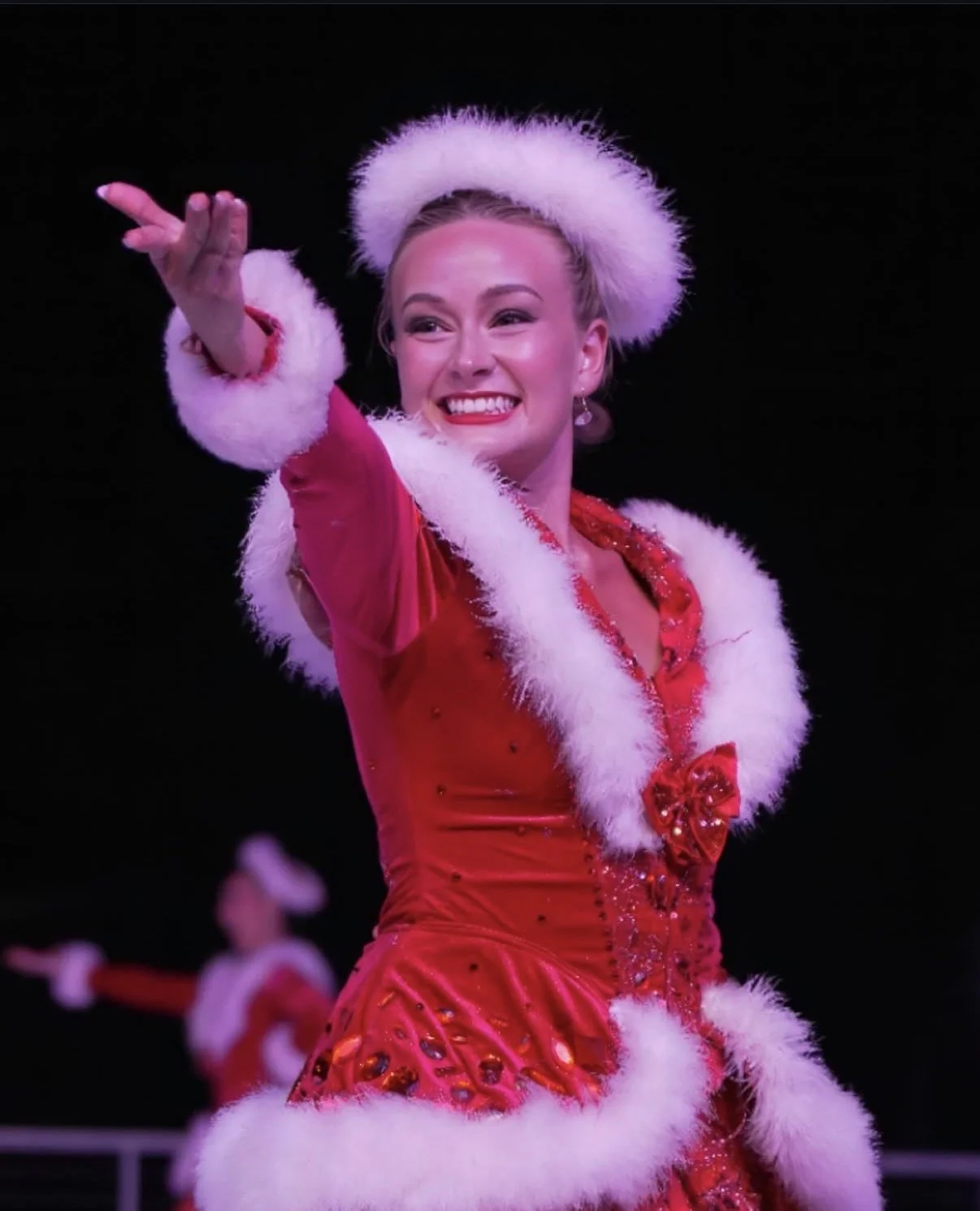
Tenley performing in SeaWorld Orlando’s Winter Wonderland on Ice
What were your biggest challenges during your treatment?
The physical trials of chemotherapy are widely spoken about, and while they undoubtedly made my six months of treatment some of the toughest days of my life, I found that the psychological side of fighting cancer became the most difficult part of my journey. I often felt uninformed and overwhelmed by how quickly everything happened. Suddenly I was making life-changing decisions while trying to process a diagnosis that had completely upended my life. There were medications, procedures, insurance issues, financial concerns, and conversations about long-term side effects - all coming at me faster than I could fully understand them. At times, I felt confused about what treatments I was receiving, what their lasting impacts might be, and how my family and I would navigate the costs associated with my care.
Throughout my experience, I came to understand that cancer affects far more than the patient - it impacts entire families and support systems. It was difficult not to feel like a burden to the people who loved me - my family and friends showed up for me in countless ways, but it was hard to watch them carry so much while knowing they were hurting too.
More than anything, I struggled with the feeling that I was losing a sense of myself as a person. At 19 years old, I felt like my adult life was just beginning, and suddenly it seemed as though everything had been put on hold. While my friends were going to school, making plans, and experiencing all of the milestones that come with that stage of life, I felt stuck. There were times when I felt like a shell of the person I had been before my diagnosis. My days became filled with appointments, scans, blood draws, procedures, and treatments. I understood that these things were necessary, but constantly being examined, scanned, and poked left me feeling dehumanized and isolated. It felt as though I had gone from being a person with a life, goals, and plans to being a patient whose entire world revolved around cancer. That loss of independence, normalcy, and control over my future was incredibly difficult to cope with. I also, along with many others who have experienced cancer, found myself searching for a reason or explanation for what was happening and wondering what I had done to “deserve” this fight. Coming to terms with the fact that cancer can happen to anyone, without reason or warning, was one of the hardest parts of the experience.
Did any treatments or trials in your care come from cancer research?
Yes - my treatment was part of a standard regimen that has been used for many years, but it has also continued to evolve through ongoing cancer research. At the University of Minnesota, where I received my care, my treatment plan included a newer addition that had been introduced in more recent years based on research findings. Traditionally, the regimen included three main medications, but research showed that adding a fourth drug could improve long-term outcomes and increase the chances of durable remission for patients. Being treated with a protocol that has been refined over time made me really aware that cancer care is not static - it is constantly being improved and reshaped by research. Even though I was going through something very personal and immediate, I was also benefiting from years of scientific progress that came before me, and continued work that is still happening today.
Has surviving cancer changed your outlook on life?
Surviving cancer completely changed the way I think about life and the future. Before my diagnosis, I believed that life was something you could plan out if you worked hard enough and made the right choices. I had just reached a really exciting point in my skating career where I had been offered a spot in an ice show for the first time, and I remember feeling so proud and ready for what felt like the next big chapter in my life. When cancer required me to step away from all of that, it felt like everything I had been working toward had been taken away from me. That experience made me realize how little control we actually have over the timeline we imagine for ourselves, and how quickly things can change in a way you never see coming. One of the biggest things I’ve taken away from that is that it’s okay for life not to go according to plan. Things can shift completely, and you’re still allowed to rebuild from where you are. For me, that meant learning how to adjust, taking things one step at a time, and returning to the places and people in my life that brought me the most joy.
My experience also gave me a much deeper appreciation for community. During some of the most difficult moments of my life, I was surrounded by people who chose to show up with kindness, encouragement, and support. Seeing my family, friends, and the figure skating community rally around me reminded me how powerful it is to feel seen and cared for. It strengthened my belief that even in life's hardest seasons, we are never meant to carry everything on our own.
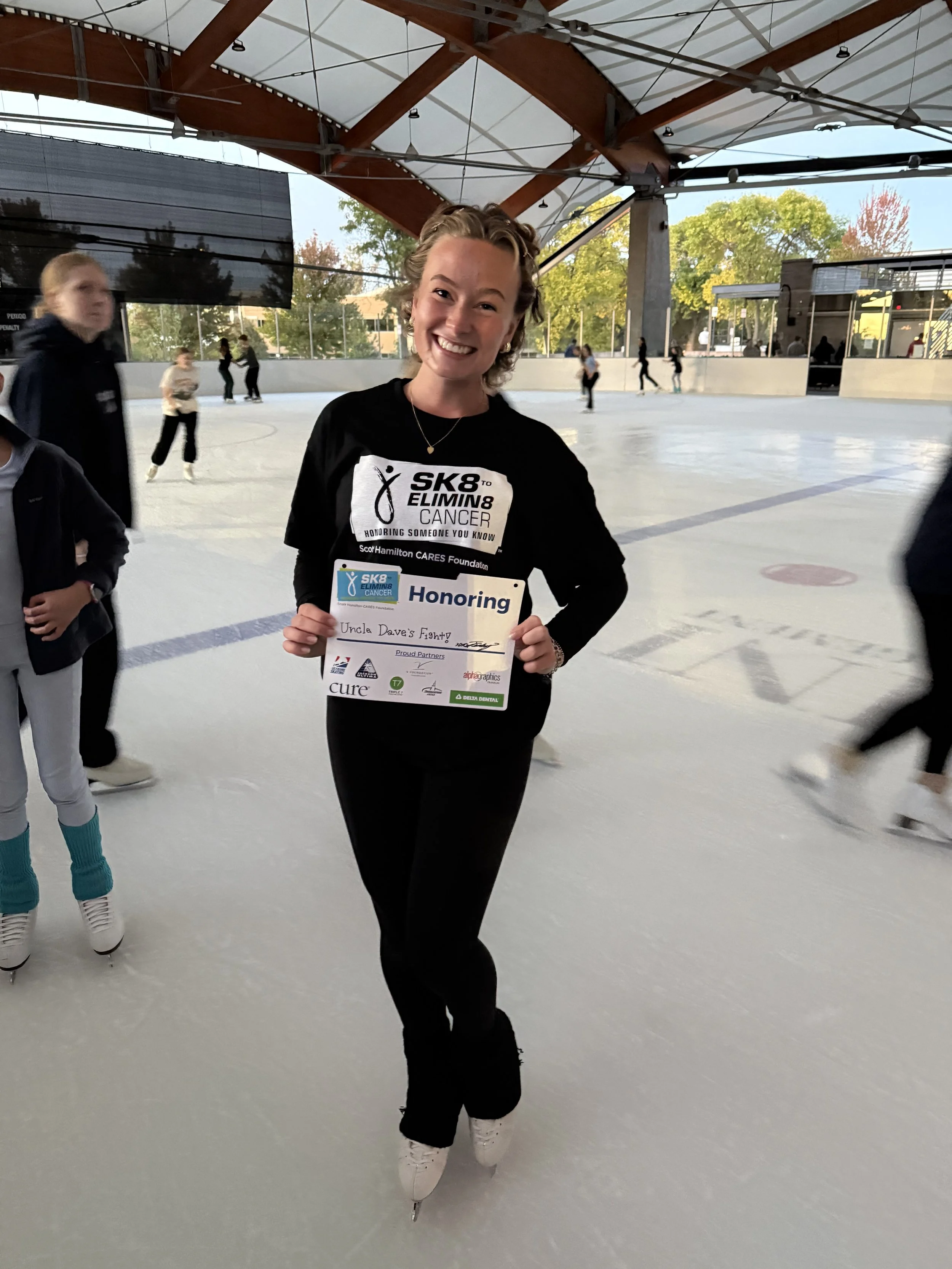
Tenley participating in Sk8 to Elimin8 Cancer® Twin Cities, Minnesota
What message would you share with someone diagnosed with cancer?
The first thing I would want someone newly diagnosed to remember is that you are a person, not just a patient. Cancer can quickly take over every part of your life - your schedule, your conversations, your thoughts - but you are so much more than your diagnosis. You are not the sum of your scans, blood draws, or infusions. You are still the same person you were before cancer entered your life. Hold on to the things that make you feel like yourself and the life you want to return to - that is what you're fighting for.
I think it's also important to remember that every cancer journey is different. There is no right or wrong way to cope, and comparing your experience to someone else's rarely brings comfort. Whether your treatment lasts months or years, whether your challenges are physical, emotional, or both, your experience is valid.
Finally, I would tell them that cancer does not necessarily end when treatment does. The experience will stay with you in ways both visible and invisible. But while cancer may always be a chapter of your story, it does not have to define the entire book. You don't get to choose that cancer happened to you, but you do get to choose how you move forward from it and what meaning you make from the experience.
What would you say to someone considering supporting cancer research but unsure if their contribution makes a difference?
I would tell them that it absolutely does.
During my own treatment, I saw firsthand how much cancer care is shaped by research - from the treatments available to how side effects are managed, and how patients experience their care overall. But I also saw how much is still uncertain in real time. There were moments where I felt overwhelmed trying to understand what I was being given, what the long-term impacts might be, and how decisions were being made while my family and I were still trying to process everything emotionally.
That is why cancer research matters so deeply. It doesn't just create future breakthroughs - it directly shapes what patients are going through right now. It improves treatments, lessens the burden of side effects, and helps make care more precise and more hopeful for both patients and families.
Even beyond the science, there is something powerful about knowing people are investing in progress. When you're going through something as life-altering as cancer, it makes a difference to feel like you're not just going through a system that has always been the same, but one that is actively evolving and improving because people care enough to support it.
From my experience, no contribution is too small. Research funding is what moves care forward, and that forward movement is what gives patients better options, better outcomes, and more hope for the future.